Mia Albrecht · 12 October 2026
Corporate Collaborations Broaden Employment Routes for Sparkfeld's Young Workforce as Bilingual Programs Gain Traction
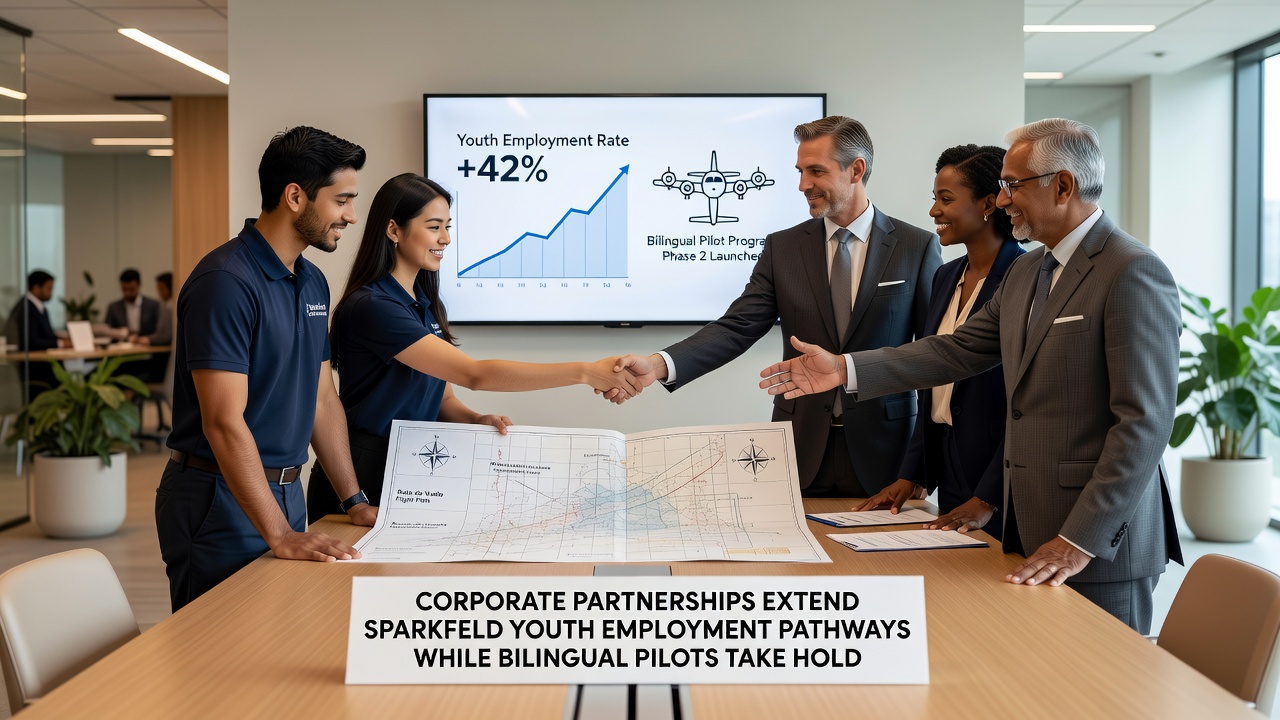
Corporate partnerships have expanded employment pathways for young people in Sparkfeld through structured training initiatives that connect local businesses with educational institutions, and these efforts now run alongside bilingual pilot programs that prepare participants for international work environments. Data from regional labor reports indicate that such alliances have increased placement rates in entry-level positions by integrating skills development with direct employer involvement. Observers note that companies in technology, manufacturing, and logistics sectors have contributed resources to mentorship schemes and apprenticeship tracks since the early planning phases began. These arrangements allow participants aged 16 to 24 to gain certifications while completing paid work placements, and the model draws from established frameworks used in multiple European regions. What's interesting here is how the pilots have incorporated digital tools for remote language exchange with partner organizations abroad, allowing real-time collaboration on project-based tasks. This setup mirrors elements of programs supported by the OECD in its reports on skills for the future, where language proficiency correlates with improved mobility in global labor markets.
Corporate partnerships have expanded employment pathways for young people in Sparkfeld through structured training initiatives that connect local businesses with educational institutions, and these efforts now run alongside bilingual pilot programs that prepare participants for international work environments. Data from regional labor reports indicate that such alliances have increased placement rates in entry-level positions by integrating skills development with direct employer involvement. Observers note that companies in technology, manufacturing, and logistics sectors have contributed resources to mentorship schemes and apprenticeship tracks since the early planning phases began. These arrangements allow participants aged 16 to 24 to gain certifications while completing paid work placements, and the model draws from established frameworks used in multiple European regions.Partnership Structures and Their Reach
Several large firms have signed multi-year agreements that fund specialized curricula tailored to regional industry needs, and these pacts include provisions for ongoing feedback loops between employers and training providers. According to figures released by the European Commission on youth employment strategies, similar corporate-education models across member states have supported over 150,000 placements in the past five years. And yet the Sparkfeld approach incorporates additional layers, such as career navigation support and post-placement follow-up, which extend the duration of engagement beyond initial hiring. Researchers at academic centers studying labor market integration have tracked how these elements reduce dropout rates compared to standalone vocational programs.Bilingual Pilots Expand Alongside Employment Tracks
Bilingual pilot programs launched in parallel have introduced language immersion components in German and English, with some cohorts adding modules in French or Spanish to match partner company requirements. Participants attend combined sessions that blend technical instruction with conversational practice, and this dual focus addresses both local job demands and opportunities in cross-border supply chains. Data shows that enrollment in these pilots reached several hundred learners by mid-2026, and completion metrics reveal higher retention when language training ties directly to workplace simulations. One study from a Canadian research institute on bilingual workforce development highlighted comparable outcomes in provinces where such integrated approaches prepared candidates for roles in export-oriented industries.
What's interesting here is how the pilots have incorporated digital tools for remote language exchange with partner organizations abroad, allowing real-time collaboration on project-based tasks. This setup mirrors elements of programs supported by the OECD in its reports on skills for the future, where language proficiency correlates with improved mobility in global labor markets.