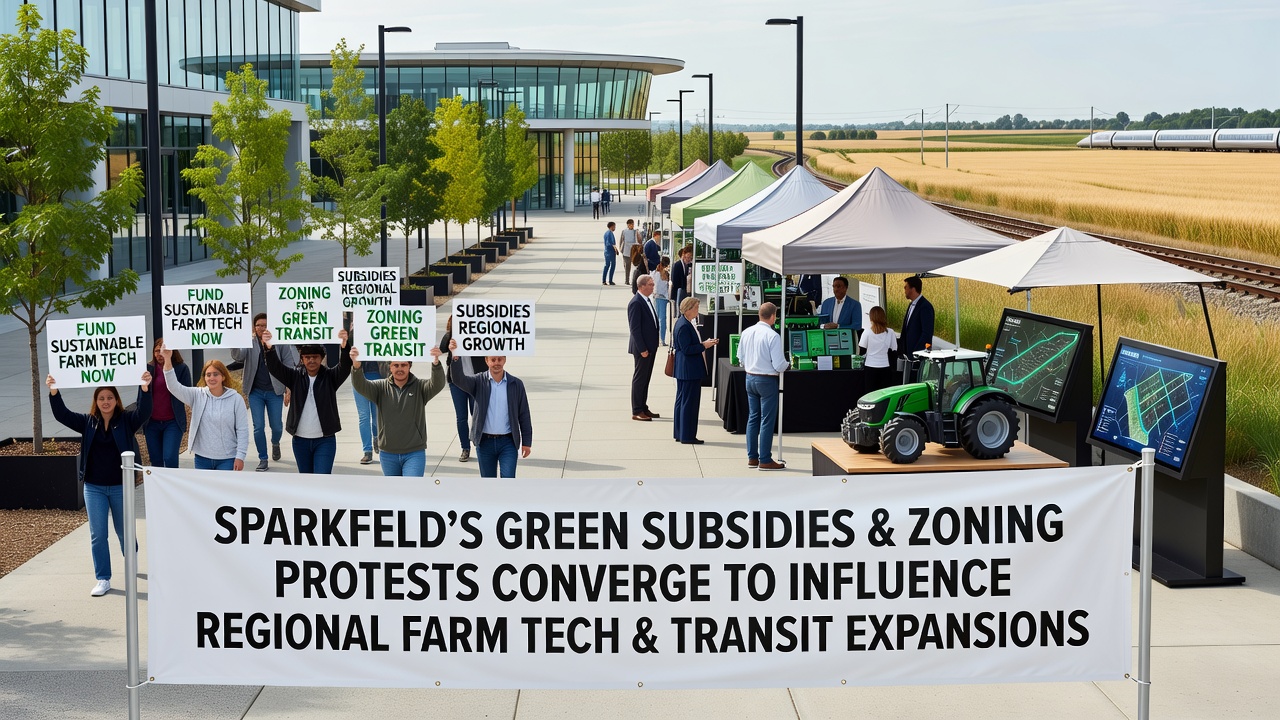
Mia Albrecht · 9 November 2026
Sparkfeld's Environmental Grants Meet Zoning Opposition, Affecting Agricultural Tech and Transportation Infrastructure
Green subsidies in Sparkfeld have drawn together funding streams from multiple agencies, and these resources now intersect with zoning protests that have gained momentum since early 2025. Observers note the combined effect on farm technology adoption and transit corridor planning, particularly as regional planners prepare for hearings scheduled in November 2026. Data from the European Commission shows agricultural subsidy allocations reached 47 million euros in the latest reporting period, while local planning records indicate at least three active zoning disputes tied to proposed equipment hubs and rail extensions.
Researchers tracking these developments point out that subsidy criteria emphasize emissions reductions and precision agriculture tools, yet community groups have filed formal objections over land use changes required for both automated irrigation systems and new transit stations. One study from Wageningen University revealed that similar policy overlaps in comparable European districts delayed project timelines by an average of 14 months, and Sparkfeld appears to follow that pattern. Planners continue to adjust routes and site selections while maintaining eligibility for the grants.
Subsidy Structures and Their Reach
Funding programs prioritize soil monitoring sensors, electric tractor fleets, and vertical farming modules that cut water use by documented percentages. Figures released by the German Federal Ministry of Food and Agriculture list 62 approved applications from Sparkfeld operators in the past fiscal year, with total disbursements exceeding 29 million euros. These grants require compliance with updated environmental benchmarks, and recipients must integrate data-sharing protocols that feed into regional transit optimization models.
Yet the same requirements have sparked pushback when installation sites overlap with protected agricultural zones or residential buffers. Community petitions collected more than 1,800 signatures opposing a proposed sensor array near the eastern transit corridor, citing concerns over noise from construction vehicles and potential changes to traditional field layouts. Planning documents show these objections triggered mandatory environmental impact reviews that extend into late 2026.
Protests Shape Project Boundaries
Local opposition has concentrated on three parcels designated for combined farm-tech testing grounds and light-rail stops. Activists argue that rapid rezoning bypasses long-standing land-use protections, while supporters highlight projected reductions in regional diesel consumption once electric transit and automated farm equipment operate in tandem. Court filings from October 2025 list eight separate appeals, and municipal records indicate two cases remain unresolved as of the current quarter.
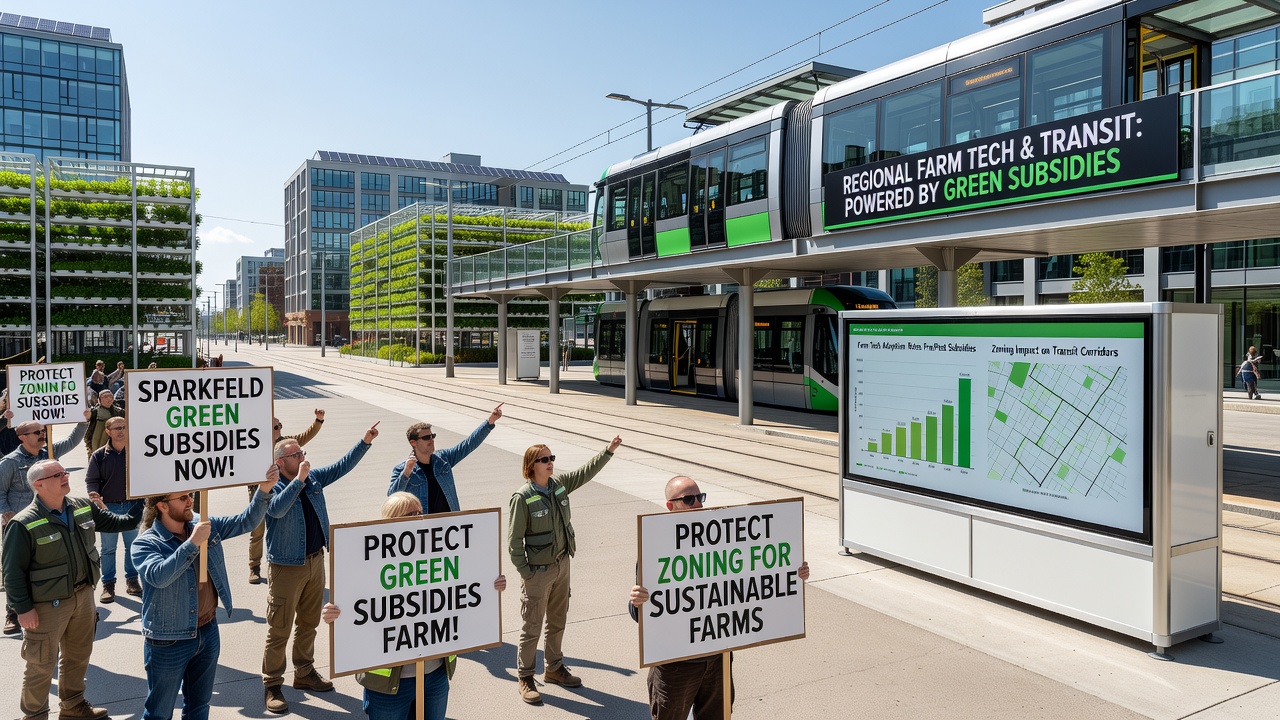
Transit authorities have responded by revising station footprints and adding buffer landscaping in revised proposals. According to Infrastructure Australia reports on analogous mixed-use developments, such adjustments raised initial capital costs by 11 to 18 percent but improved long-term community acceptance rates. Sparkfeld officials have cited these examples during public consultations, noting that phased implementation could begin after the November 2026 sessions conclude.
Effects on Farm Technology Deployment
Equipment suppliers report increased interest in drone-based crop monitoring and AI-driven irrigation controls, yet several pilot projects sit on hold pending zoning clearances. Agricultural extension services document a 27 percent rise in inquiries for grant-eligible machinery since subsidy announcements, while installation contractors note delays averaging nine months on contested sites. Researchers from the University of Guelph have tracked parallel cases in Ontario, where similar protests shifted technology clusters toward already-approved industrial parks rather than dispersed farmland locations.
Those shifts alter expected efficiency gains, because centralized testing sites reduce the geographic coverage of real-time soil data collection. Regional models project a 9 percent lower emissions reduction if deployment remains concentrated rather than distributed across the original target zones.
Transit Expansions and Interlinked Planning
Transit planners have incorporated farm-tech logistics requirements into route designs, including dedicated freight spurs for equipment transport and charging stations sized for electric agricultural vehicles. Updated schedules released in September 2025 list completion targets for two new lines by 2028, contingent on zoning resolutions. Coordination meetings between transit boards and agricultural cooperatives have produced joint proposals for shared power infrastructure that qualifies for additional green funding streams.
These linkages create feedback loops: transit capacity influences where automated farm systems can scale, and subsidy rules in turn dictate which transit-adjacent parcels meet environmental scoring thresholds. Observers tracking the process note that unresolved protests in November 2026 could push at least one corridor segment into 2029.
Conclusion
Green subsidies and zoning protests continue to reshape timelines and locations for both farm technology and transit projects across Sparkfeld. Planning records, grant data, and court documents together illustrate how policy incentives and community objections interact, producing measurable shifts in project scope and sequencing. As the November 2026 hearings approach, outcomes will determine whether distributed technology adoption and integrated transit corridors advance on current schedules or require further redesign.