Otto Washington · 14 September 2026
Sparkfeld's Market Square Revival Sparks Fresh Ideas for Blending Historic Preservation With Modern Flood Barriers
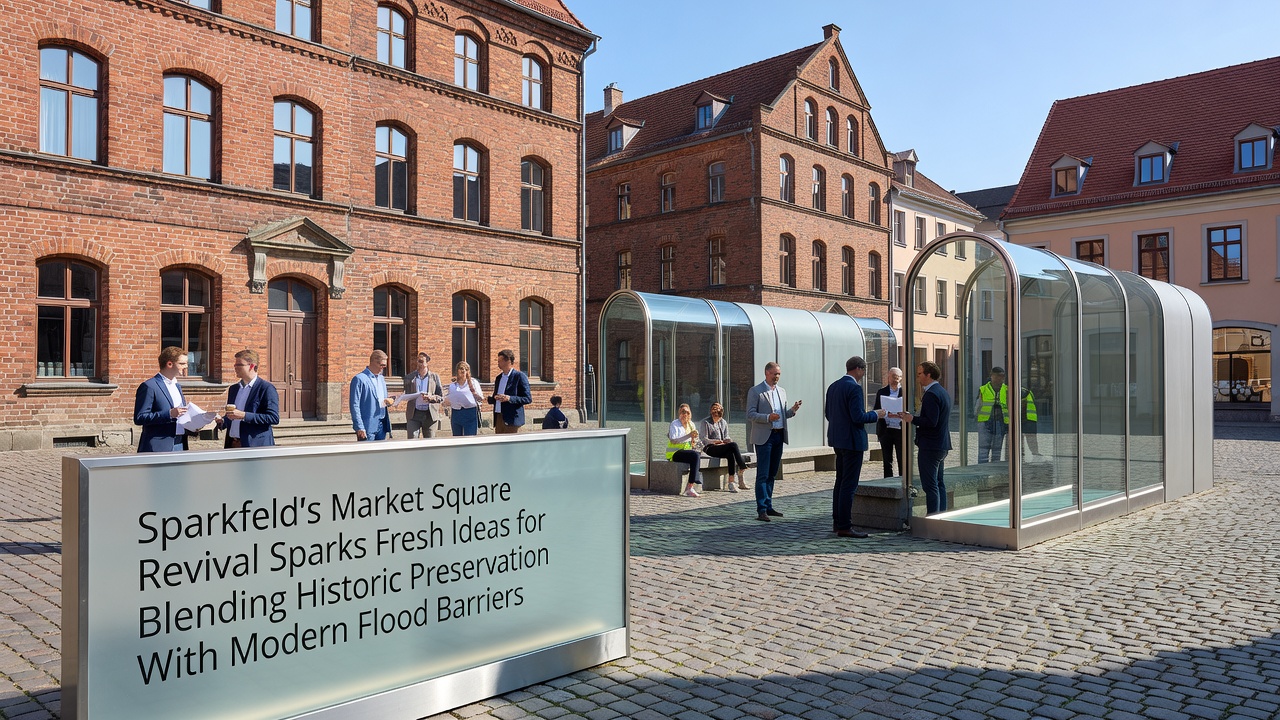
Urban planners in Sparkfeld have launched a coordinated effort to restore the historic Market Square while integrating advanced flood protection measures that address recurring water level rises in the region, and this initiative draws on engineering techniques that maintain the architectural integrity of 18th and 19th century structures without compromising their original facades or cobblestone layouts.
Local authorities coordinated with preservation specialists and civil engineers to develop barriers that sit below ground level during dry periods yet rise automatically when sensors detect approaching flood stages, and these systems use materials that match the stone and timber tones found throughout the square so the additions remain visually consistent with surrounding heritage elements.
Preservation Techniques Meet Engineering Standards
Restoration crews began by cataloging every facade detail and structural joint in the Market Square buildings, then applied reversible reinforcement methods that allow future adjustments if flood patterns shift, while data from regional monitoring stations shows water levels have increased by an average of 12 centimeters per decade since the 1990s according to records maintained by the European Environment Agency.
Workers installed hidden steel frames behind existing walls and used lime-based mortars compatible with original construction materials so the buildings retain their breathability and avoid moisture trapping that could accelerate decay, and similar approaches have succeeded in other European sites where historic districts sit near rivers prone to seasonal overflow.
Integrated Flood Defense Systems
The flood barriers consist of modular panels that connect to a central pumping station powered by solar arrays mounted on nearby rooftops, and these panels deploy in under four minutes once triggered by a network of river gauges located upstream, whereas traditional sandbag methods required hours of manual labor and often left residue that damaged historic paving stones.
Engineers tested the system during simulated high-water events last spring and confirmed that the barriers held back flows equivalent to a once-in-fifty-year flood without visible deflection or leakage, and the design also incorporates drainage channels that direct excess water away from foundations to prevent undermining of the square's underground utility tunnels.
Timeline and Upcoming Milestones
Construction phases rolled out in stages beginning in early 2025, with the first set of barrier units activated in March of that year and full integration scheduled for completion by September 2026 when officials plan a public demonstration of the combined preservation and protection features during the annual autumn market festival.
Funding came from a combination of municipal bonds and grants administered through national heritage programs, and project managers report that 87 percent of the allocated budget has been spent on materials sourced within 150 kilometers of Sparkfeld to reduce transportation emissions and support regional suppliers.
Community and Regulatory Context
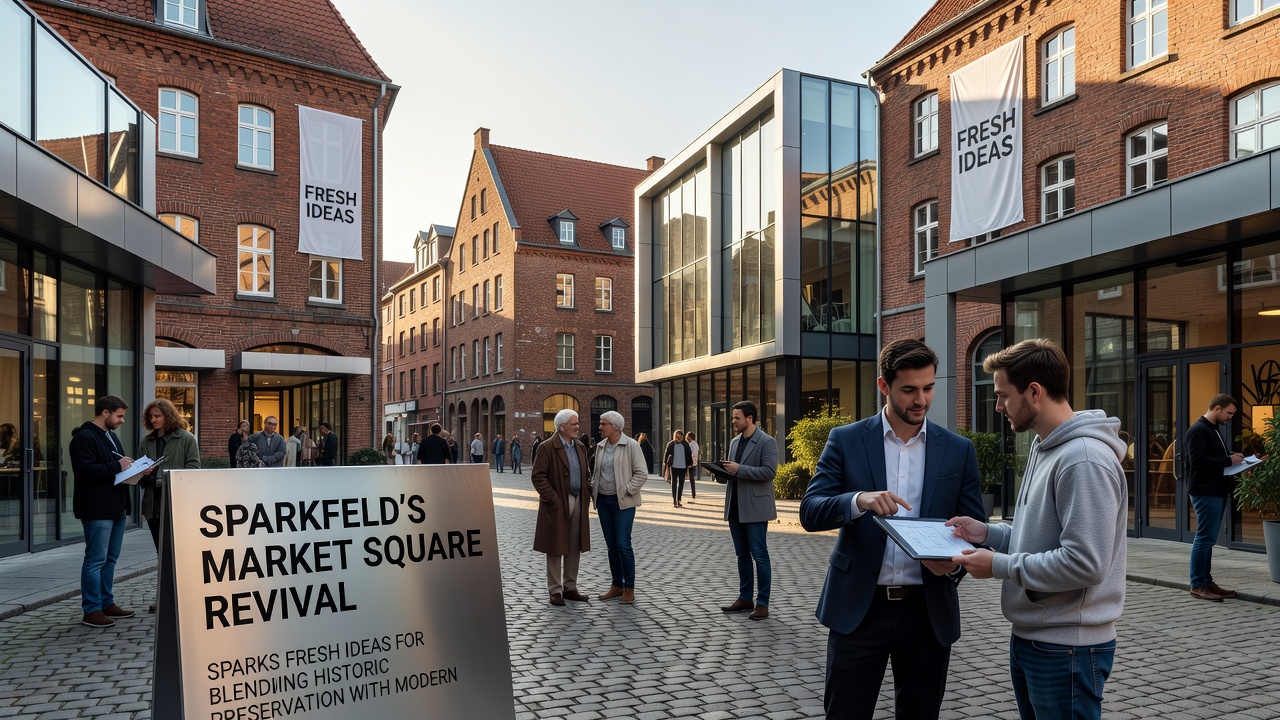
Residents have participated in workshops where they reviewed scale models of the square under both normal and flood conditions, and feedback sessions led to minor adjustments such as adding non-slip textures to the barrier surfaces that become walkways when retracted, while regulatory reviews by the German Federal Waterways and Shipping Administration confirmed compliance with updated EU flood risk directives that emphasize nature-based solutions alongside engineered structures.
Similar projects in other river towns have shown that blending preservation with modern barriers can extend the usable lifespan of historic districts by decades, and observers note that Sparkfeld's approach avoids the common pitfall of constructing visible concrete walls that alter the character of central gathering spaces.
Conclusion
The Market Square revival demonstrates how detailed documentation, reversible interventions, and sensor-driven infrastructure can coexist within a single historic site, and as the September 2026 completion date approaches, the completed systems will provide measurable data on long-term performance that other municipalities facing comparable challenges can reference when planning their own upgrades.